Yard and slots: what it does
- One ID per truck from gate to dock
- Arrival forecasts and late-arrival risk per booking
- Door allocation by capacity rules
- Exception agent that proposes, never acts alone
- Every decision written to the decision log
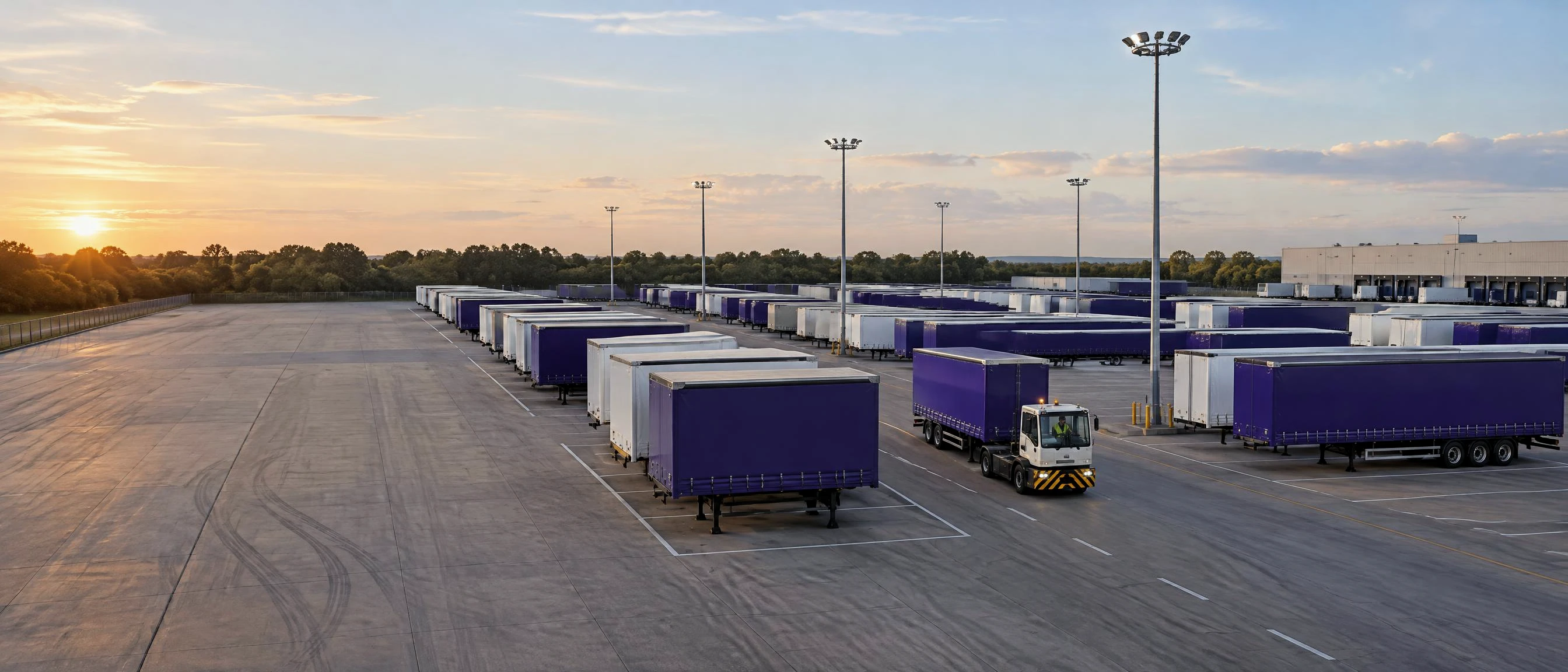
The queue, the slots and the live doors decide where each truck goes. Clean visits get a door by capacity rules; the few exceptions get an agent proposal that a supervisor approves.
The yard model that decides where each truck goes
The queue, the slots and the live doors decide.
Clean visits get a door by the site's own capacity rules.
Arrival forecasts per hour came out 25% better than assuming every truck arrives on its slot (MAE 0.915 against 1.216 trucks an hour, simulated yard).
Each booking also gets an arrival risk, so the yard can move docks before a late truck blocks one (ROC-AUC 0.862, recall 86%, open and simulated data).
When something changes, a proposal with its reason goes to a supervisor; by default nothing moves without a yes.
Maya plans, Tony asks, you decide
Maya, the planner, watches for a blocked dock, a truck waiting too long or a gate hold and briefs Tony with what she recommends.
On 40 simulated exception cases every proposal was usable. Sites can let Maya make routine moves on her own, within limits, and report each one.
Each truck keeps one ID across the yard cameras.
Arrival time and late-arrival risk are forecast per booking.
Rules assign the door; exceptions become proposals for a supervisor.
Every figure names where it comes from: open datasets, simulated yard days, load tests or the design itself.